
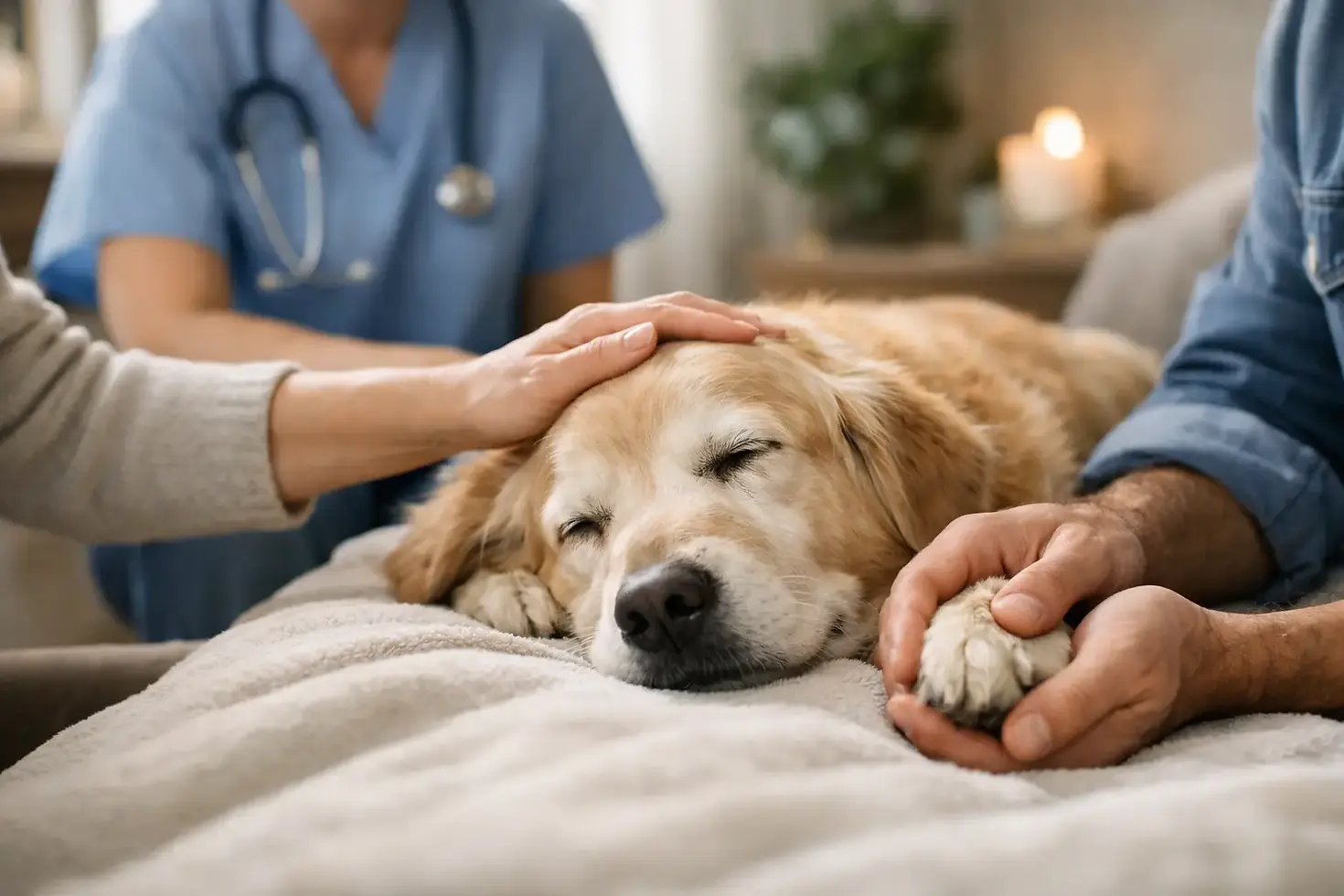
A Gentle Guide to Peaceful Pet Passing at Home

The last good day is rarely announced. It may arrive when your dog no longer greets you at the door, when your cat has stopped seeking the sunny windowsill, or when comfort has become harder to find than it once was. This guide to peaceful pet passing is for families facing that tender, painful place: loving a pet deeply while recognizing they may be nearing the end of life.
There is no perfect way to say goodbye. There can, however, be a gentle and dignified one. Thoughtful planning can ease some of the uncertainty, helping you focus less on logistics and more on the moments you still have together.
Knowing When It May Be Time
Many families hope their pet will tell them clearly when it is time. Sometimes they do, through a sudden crisis or obvious suffering. More often, the signs are quieter and harder to interpret. A beloved dog or cat may have good hours mixed with difficult ones, which can make the decision feel especially heavy.
Rather than looking for one single sign, consider your pet's overall quality of life. Are they comfortable enough to rest? Can they eat or drink with reasonable ease? Are pain, anxiety, confusion, nausea, or breathing difficulty becoming more frequent? Do they still enjoy the people, places, foods, or routines that once mattered to them?
It can help to write down good and difficult moments for several days. Families often notice patterns more clearly on paper than they can while living inside the emotion of each day. If difficult days are beginning to outnumber peaceful ones, or if your pet can no longer experience the things that make life feel like their own, it may be time to speak with a veterinarian.
Choosing euthanasia is not giving up. When a pet's body can no longer support comfort or joy, choosing a peaceful passing can be a final act of protection. It is a decision made from love, even when it hurts.
Why an At-Home Goodbye Can Feel Different
For a frail, painful, or anxious pet, a trip to a veterinary clinic can be difficult. The car ride, unfamiliar smells, waiting room noise, and physical effort of getting inside may add stress at a time when comfort matters most. At home, your pet can remain in the place they know best.
They may rest on a favorite bed, lie in a patch of sun, or be surrounded by the people who have cared for them throughout their life. Cats can stay in their familiar room. Dogs can be held on the couch or settled in the yard if the weather and their condition allow. In the greater Phoenix area, an indoor space is often the most comfortable choice during extreme heat, but every family can decide what feels right for their pet.
At-home euthanasia also gives families more privacy. There is no need to leave quickly for another appointment or hold back tears in a public lobby. You can take the time you need before and after the veterinarian arrives.
Preparing for a Peaceful Pet Passing
You do not need to create a picture-perfect final day. Your presence is enough. Still, a few simple preparations can make the experience feel calmer and allow you to be more present when the time comes.
Choose a comfortable location with enough space for your pet and the people who wish to be nearby. A familiar blanket, bed, or soft towel can help them settle. Some families play quiet music, light a candle after the appointment, or keep the room naturally quiet. These details are not required, but they can offer a sense of intention.
Think ahead about who should be present. Some people want their closest family members there; others feel that one calm person is best. There is no measure of love in the size of the gathering. The right choice is the one that helps your pet feel safe and allows your family to be authentic in their grief.
If children are involved, honest and gentle preparation is usually kinder than vague explanations. Use clear language such as, “The veterinarian will help our pet die peacefully because their body is no longer working well.” Let children know that crying, asking questions, sitting nearby, or choosing not to watch are all okay. A child might want to draw a picture, share a memory, or say goodbye in their own way.
Before the appointment, decide whether you would like private aftercare or home burial, where legally permitted and practical. Your veterinarian can explain available aftercare options and what will happen after your pet has passed. Making that choice beforehand can prevent you from having to make a difficult decision in the most emotional minutes of the day.
What Usually Happens During In-Home Euthanasia
A compassionate veterinarian should explain every step and move at your pet's pace. While each appointment is personalized, in-home euthanasia typically begins with time to talk, ask questions, and share concerns. Your veterinarian will assess your pet and make sure the plan supports their comfort.
In many cases, a sedative is given first. This medication helps a pet become deeply relaxed and sleepy, often while resting beside their family. It may take several minutes to take full effect. During that time, you can continue speaking softly, petting them, or simply sitting close.
Once your pet is fully relaxed, the veterinarian administers the final medication. It works quickly and painlessly to stop the heart. Your veterinarian will listen carefully and confirm when your pet has passed.
Some natural changes can occur after death, including a final breath, small muscle movements, or the release of urine or stool. These are physical reflexes, not signs that your pet is aware or suffering. Knowing this ahead of time can be reassuring, particularly when the moment is already so emotional.
There is no need to rush your goodbye afterward. Families may want a few quiet minutes to hold a paw, touch a familiar ear, speak one more sentence, or simply sit in silence. A caring veterinarian will honor that need for time.
Small Choices That Can Bring Comfort
A peaceful experience does not depend on getting every detail right. It depends on protecting your pet's comfort and making room for your love. If your pet is still interested in food and it is medically appropriate, a favorite treat can be a sweet part of the day. If eating is difficult or unsafe, comfort may simply mean a familiar scent, a gentle hand, or a quiet place to rest.
Some families invite another pet to see or sniff their companion afterward. This can help surviving pets understand that their friend is gone, though every animal responds differently. Keep the environment calm, and let the remaining pet approach or walk away as they choose.
You may also wish to create a keepsake. A paw print, a clipping of fur, a collar, a favorite photo, or a handwritten note can become meaningful later. Do not feel pressure to do these things in the moment. Grief does not follow a schedule, and there are many ways to remember a life well loved.
Caring for Yourself After Goodbye
The quiet after a pet passes can feel startling. You may feel sadness, relief, guilt, numbness, gratitude, or all of these emotions within the same hour. Relief does not mean you loved them less. It can mean you are grateful their pain has ended.
Try to give yourself permission to grieve without judging how it looks. Some people need to speak about their pet constantly; others need privacy. Children may move in and out of sadness quickly. Partners may grieve differently. None of this is wrong.
In the first few days, practical routines can help. Drink water, eat something simple, and accept help if someone offers it. If your grief feels unbearable or begins to interfere with your ability to function, support from a counselor or pet loss group can provide a compassionate place to talk.
A Gentle Guide to Peaceful Pet Passing Means Trusting Love
The decision to let a pet go is one of the hardest responsibilities of loving them. It asks you to place their comfort above your wish for more time, and that can feel impossibly unfair.
But your pet has known your voice, your hands, your home, and your care. A peaceful goodbye is not defined by the absence of tears. It is defined by the presence of love, steady comfort, and the promise that they did not have to face their final moments alone.


Comments