

Pet Hospice vs Euthanasia: Which Is Right?
- Christina Barber
- Jul 30
- 6 min read

A beloved pet can still recognize your voice, enjoy a favorite treat, or rest in a sunny spot while their body is quietly telling you that time is short. That is why the question of pet hospice vs euthanasia can feel so complicated. It is rarely about loving your dog or cat enough. It is about wanting to protect their comfort while also wishing for one more good day.
Both options can be deeply loving. The right path depends on your pet’s medical needs, their daily quality of life, and what your family can realistically provide. A trusted veterinarian can help you understand those pieces without rushing you through a decision.
Pet hospice vs euthanasia: the essential difference
Pet hospice is comfort-focused care for a pet with a terminal illness, advanced age, or declining condition. Rather than trying to cure the underlying disease, hospice care focuses on easing pain, managing symptoms, preserving dignity, and helping a pet remain comfortable at home for as long as possible.
Euthanasia is the compassionate medical act of peacefully ending a pet’s life when suffering can no longer be adequately relieved or when a further decline is expected to take away the things that make life meaningful to them. It is not a failure of hospice care. In many cases, hospice and euthanasia are part of the same loving plan: hospice supports a pet through their final season, and euthanasia prevents a crisis or prolonged discomfort at the end.
Some families choose euthanasia soon after a serious diagnosis because their pet is already struggling. Others begin hospice care and have days, weeks, or occasionally longer to share quiet, meaningful time together. Neither timeline is more devoted than the other.
What pet hospice care can look like at home
Hospice is not simply waiting. It is an active plan, created with veterinary guidance, to make each day as comfortable as possible. Depending on your pet’s condition, that may include pain medication, anti-nausea medication, appetite support, mobility assistance, wound care, help with hydration, and adjustments to their bedding or daily routine.
For an older dog with arthritis and cancer, comfort may mean soft bedding near the family, medication timed around painful moments, help getting outside, and smaller meals offered by hand. For a cat with kidney disease, it may mean managing nausea, encouraging food intake, providing easy access to a litter box, and reducing stressful handling.
The goal is not to ask a pet to push through discomfort for our sake. It is to protect the moments that still feel like life to them: resting peacefully, enjoying affection, eating something they love, watching the household from a familiar place, or greeting their favorite person at the door.
Hospice can also give families time. There may be an opportunity for children to say goodbye gradually, for relatives to visit, or for a family to simply be together without the pressure of making every moment perfect. That time can be precious, but it is most peaceful when paired with honest monitoring and a clear plan for when comfort is no longer enough.
When hospice may be a good fit
Hospice may be appropriate when a pet’s pain and symptoms can still be managed, they have more comfortable days than difficult ones, and their family is able to provide attentive care. A pet does not need to be energetic or symptom-free to have a meaningful quality of life. Many senior pets move slowly, sleep more, and need extra support while still finding joy and feeling safe.
It may also be a good choice when the diagnosis is terminal but the immediate future is uncertain. Hospice gives you and your veterinarian a way to observe the changes that matter rather than making a decision based on fear alone.
Still, hospice requires flexibility. A pet’s condition can change quickly, especially with cancer, heart disease, neurological illness, or organ failure. Families often feel steadier when they have discussed what to do if their pet declines overnight, stops eating, has uncontrolled pain, or begins having trouble breathing.
When euthanasia may be the kinder choice
Euthanasia may be the gentlest choice when suffering cannot be controlled, when a pet is having more bad days than good ones, or when a medical crisis is likely to occur. A peaceful goodbye can spare a pet from reaching a point of panic, severe pain, respiratory distress, repeated seizures, or complete exhaustion.
The signs are not always dramatic. Sometimes the change is quieter: your dog no longer wants to rise to greet you, your cat spends nearly all day hiding, or favorite foods no longer bring interest. Other times, a pet can no longer get comfortable despite medication, cannot walk safely, has frequent accidents that cause distress, or seems confused and frightened much of the time.
No single sign determines the answer. Look at the whole picture over several days. Consider appetite, hydration, mobility, toileting, breathing, sleep, pain, anxiety, connection with family, and whether your pet still has experiences they enjoy. Many families find it helpful to keep a simple calendar and mark good days and hard days. Patterns often become clearer when you are not relying on memory in the middle of grief.
A veterinarian can also help distinguish between a temporary setback and a decline that is unlikely to improve. That clinical perspective matters. Loving someone deeply can make it hard to know whether we are seeing a difficult day or a difficult new normal.
Choosing before a crisis
One of the hardest parts of this decision is that waiting can feel safer than choosing. Families may worry they are acting too soon, particularly if their pet still has moments of brightness. Yet choosing euthanasia before an emergency is not giving up. It can be a way of honoring the peaceful moments that remain rather than risking a final day filled with fear and urgent decisions.
There is no perfect day, and few people feel completely ready. The aim is not certainty. The aim is a decision made from love, informed by your pet’s comfort and supported by medical guidance.
How an in-home euthanasia experience can help
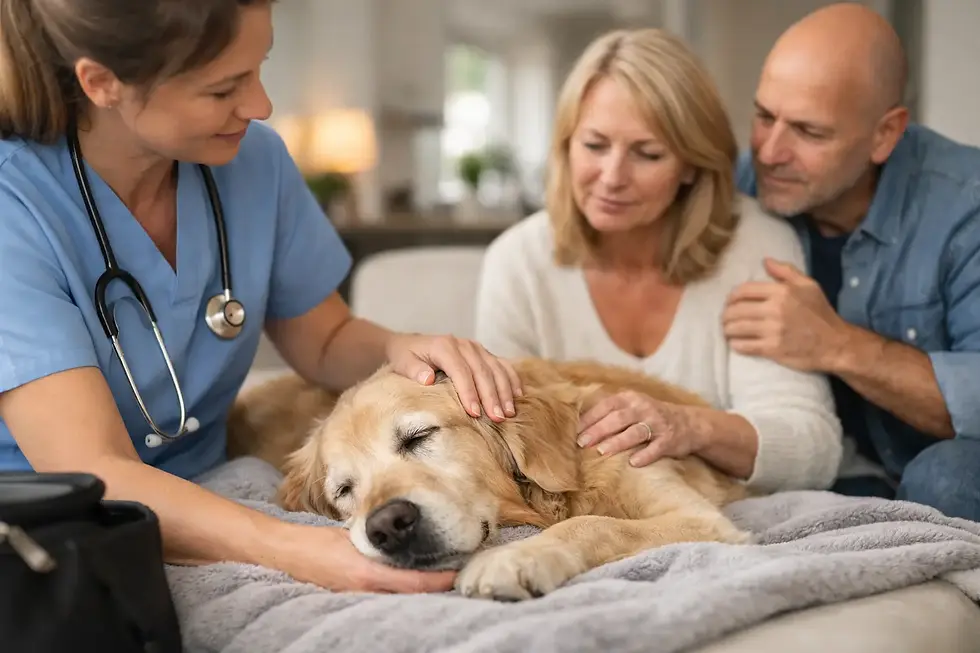
For pets who are fragile, anxious, or uncomfortable traveling, an in-home euthanasia appointment can offer a calmer alternative to a clinic visit. Your dog or cat can stay in a familiar room, on a favorite bed, or near the people who love them. There is no waiting room, no car ride, and no need to leave their safe place during an already tender time.
A compassionate veterinarian will explain each step, allow time for questions, and move at your pet’s pace. Families may choose to sit close, hold a paw, play soft music, or simply speak to their pet. There is room for tears, silence, and the small rituals that feel right for your family.
Forever Loved Veterinary Services provides personalized in-home euthanasia for families across the greater Phoenix area, with a focus on a gentle, unhurried farewell. For many people, having that private time at home brings comfort when the decision itself feels unbearably heavy.
Questions to ask your veterinarian
When you are weighing hospice against euthanasia, clear questions can make a painful decision feel a little less lonely. Ask what your pet is likely to experience in the coming days or weeks, which symptoms can be managed at home, and which changes would signal that their comfort is slipping away.
You can also ask whether your pet is at risk for a sudden crisis, how to recognize pain that may not be obvious, and what an emergency plan should be. If euthanasia becomes the kindest option, ask what the process will be like, how much time you will have with your pet, and what aftercare choices are available.
These are not cold or clinical questions. They are acts of care. They help you prepare to protect your pet when they need you most.
Give yourself permission to choose compassion
Anticipatory grief can make every choice feel like a test you might fail. It is not. Hospice can be a beautiful way to care for a pet whose days are still comfortable. Euthanasia can be a final gift when comfort has become too difficult to preserve. Sometimes the right decision changes as a pet’s condition changes.
Try to let your pet’s needs lead, even when your heart wants more time. The love you have given them is not measured by how long you can hold on. It is reflected in the gentleness, safety, and dignity you offer them now.


Comments