
In-Home Pet Euthanasia Near Me Within 20 Mi

When someone types in-home pet euthanasia near me within 20 mi, it usually means this is no longer a distant question. It is happening now, or very soon, and your family is trying to make a loving decision while carrying a great deal of heartbreak. In that moment, what most people want is not just a name on a map. They want reassurance that their dog or cat can be cared for gently, peacefully, and with dignity.
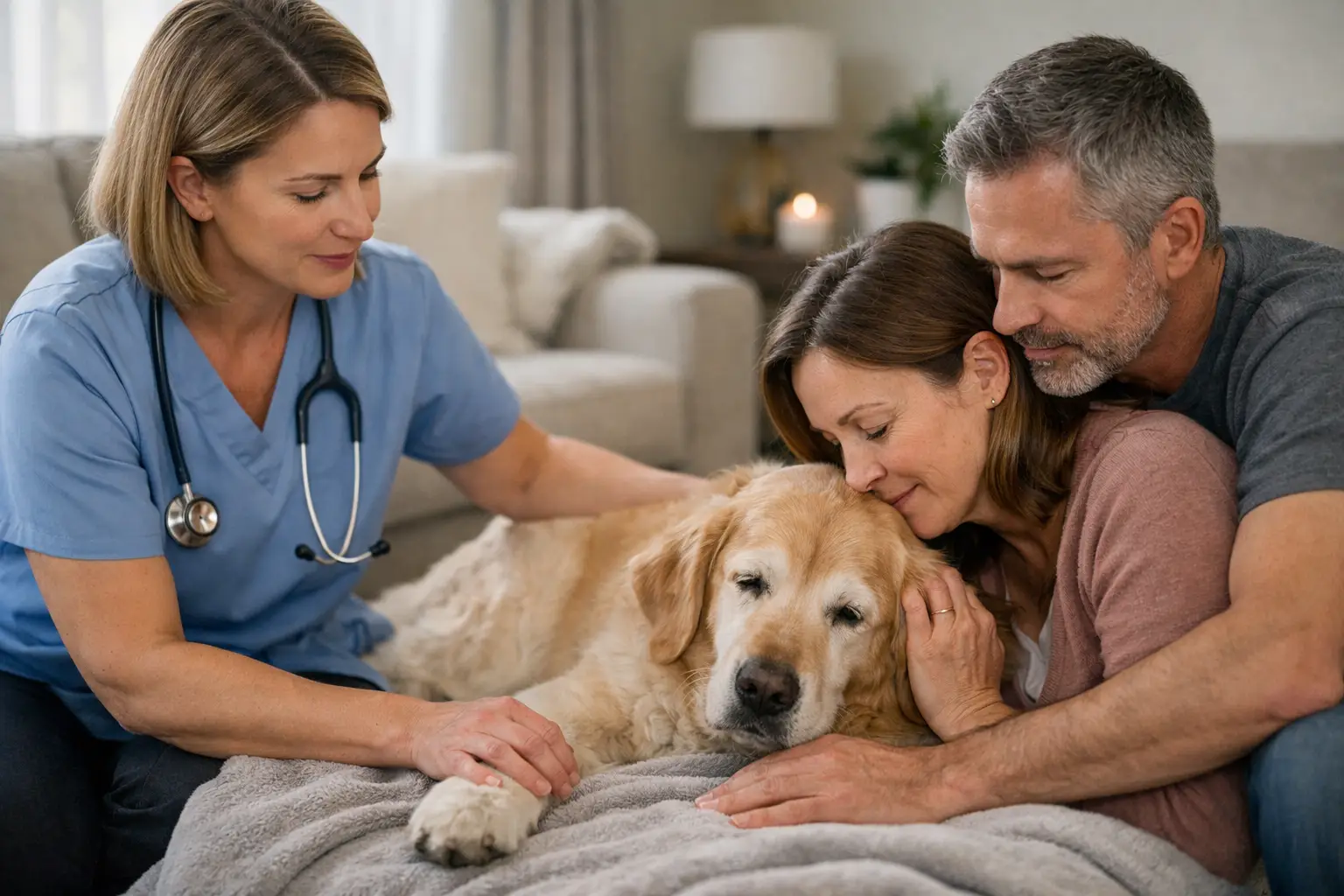
For many families, saying goodbye at home feels more humane than a final trip to a clinic. A beloved pet can remain in a favorite bed, on the couch, in a sunny spot by the window, or in the arms of the people who love them most. That familiar setting often helps reduce fear and stress, especially for pets who are frail, anxious, painful, or no longer able to travel comfortably.
Why families search for in-home pet euthanasia near me within 20 mi
The search itself says a lot. People are often looking for a veterinarian who can come soon, who serves their area, and who understands that this is not a routine appointment. Distance matters because timing matters. If your pet is declining quickly, has stopped eating, is struggling to stand, or seems unable to settle comfortably, a provider within a reasonable driving range may be able to help more promptly.
But proximity is only one part of the decision. The nearest service is not always the best fit. When you are inviting someone into your home for your pet’s final moments, the quality of that experience matters deeply. A calm, patient veterinarian who moves at your pet’s pace can make an enormous difference.
That is why many families look beyond mileage and ask a more meaningful question: will this person help my pet feel safe, and will they help us feel supported?
What a peaceful in-home euthanasia experience should feel like
A gentle home visit should never feel rushed. The veterinarian should take time to listen, explain the process clearly, and give your family space to ask difficult questions. There is usually time for everyone to gather, sit close, say what needs to be said, and create a calm environment before anything medical begins.
In most cases, the first step is sedation. This helps your pet relax and fall into a deep, peaceful sleep. For many families, this part brings visible relief. A pet who has been restless, uncomfortable, or anxious is finally able to settle. Once your pet is fully asleep and your family is ready, the final medication is given to allow a peaceful passing.
The details matter here. Some pets need extra time. Some families want silence, while others want to talk, pray, cry, or hold their pet throughout the appointment. A compassionate veterinarian will recognize that there is no single right way to say goodbye.
How to choose the right provider, not just the closest one
If you are comparing services, it helps to look for a veterinarian who specializes in end-of-life care rather than offering it only occasionally. Experience matters, especially when a pet is medically fragile or when emotions are running high. You want someone who is clinically skilled, but also emotionally steady.
It is reasonable to ask how the visit works, how much time is typically set aside, whether aftercare options are explained clearly, and who will actually come to your home. Some families prefer an independently owned practice because the experience can feel more personal and consistent. Others may prioritize the earliest available appointment. Neither choice is wrong. It depends on your pet’s condition, your family’s needs, and what kind of support feels most comforting right now.
You may also want to ask whether children or other pets can be present, what happens if your pet passes naturally before the appointment, and how the veterinarian helps if you are unsure whether it is time. A thoughtful provider will answer these questions with honesty and kindness, not pressure.
Signs that bedside manner matters as much as medical skill
A good conversation should leave you feeling steadier, not more confused. You should feel heard. Your concerns about pain, timing, mobility, breathing changes, or quality of life should be taken seriously. If the response feels transactional or hurried, that may not be the right fit for such an intimate moment.
The best in-home euthanasia care is both medical and human. It brings professional confidence into a room that is full of love, fear, grief, and often uncertainty.
When it may be time to consider euthanasia at home
This question rarely has a perfectly clear answer. Some pets have an obvious crisis, while others decline slowly over weeks or months. Families often wonder if they are choosing too soon, or waiting too long. That uncertainty is one of the hardest parts.
You may be noticing that your pet no longer enjoys the things that once brought comfort, such as eating, greeting you, walking, grooming, or resting peacefully. You may see more pain, confusion, labored breathing, accidents, weakness, or withdrawal. Sometimes the kindest choice becomes clearer when the difficult moments begin to outnumber the comfortable ones.
Even then, there can be gray areas. A pet may still have a bright look in their eyes but struggle physically. Another may be eating treats but unable to sleep without distress. Quality of life is not one single symptom. It is the whole picture.
A veterinarian with end-of-life experience can help you think through that picture with compassion and clinical clarity. In the Phoenix area, many families seek this kind of guidance from practices such as Forever Loved Veterinary Services because they want a one-on-one conversation, not a rushed decision made in a stressful clinic setting.
What to prepare before the appointment
You do not need to create a perfect moment. You only need to create a calm one.
Most families choose a quiet spot with enough room to sit together. Soft blankets, a favorite bed, low lighting, or a familiar toy can help. If your pet is still interested in food, some families offer a favorite treat at the beginning of the visit. Others keep things very simple and just stay close.
It can also help to think ahead about who should be present. Some people want the whole family there. Others prefer one or two people so the room stays peaceful. If there are children involved, gentle and age-appropriate honesty often helps more than trying to shield them completely. If there are other pets in the home, some families want them nearby, while others prefer to separate them until afterward.
Practical choices matter too. Before the appointment, ask about aftercare so you are not making decisions through fresh shock. Knowing the plan in advance can make the day feel a little less overwhelming.
What to expect emotionally afterward
Relief and grief often arrive together. Many people are surprised by that, and then feel guilty for the relief. But relief does not mean your love was smaller. It often means you could no longer bear watching your pet struggle.
The home may feel very quiet afterward. Routines can suddenly feel hollow. You may reach for the leash, listen for paws on the floor, or wake up expecting to give medication or help them outside. This is part of grief. It is not dramatic, and it is not small. It is the absence of a daily relationship that mattered.
Give yourself permission to mourn in your own way. Some families want keepsakes, photos, paw prints, or a private ritual. Others need rest and silence. There is no correct timeline for any of it.
A local search can lead to a deeply personal choice
Searching for in-home pet euthanasia near me within 20 mi may begin as a practical need, but it quickly becomes something more personal. You are not just choosing a service area. You are choosing the setting, pace, and support that will shape one of the final memories you carry with your pet.
If home feels like the gentlest place for goodbye, trust that instinct. A peaceful passing does not erase the heartbreak, but it can offer something many families hope for in the end - comfort, dignity, and the chance to be fully present with the love you shared.


Comments