

How to Schedule Pet Euthanasia with Care
- Christina Barber
- 1 day ago
- 5 min read

The decision may have been growing quietly for weeks, or it may have arrived after a difficult night. Either way, learning how to schedule pet euthanasia can feel overwhelming when your heart is already carrying so much. You do not need to have every detail figured out before you reach out. A compassionate veterinary team can help you understand the options, answer practical questions, and create a peaceful plan for your beloved dog or cat.
Begin with the question: Is it time?
There is rarely one perfect moment that makes the decision clear. More often, families notice a gradual change: pain that is harder to manage, declining mobility, confusion, loss of appetite, labored breathing, or fewer moments of joy and connection. A pet may still have good moments, even while their overall quality of life is slipping.
If you are uncertain, start by talking honestly with a veterinarian. Share what a typical day looks like for your pet, including their comfort, appetite, bathroom habits, sleep, mobility, and interest in the people and things they love. It can help to write down what you are seeing for several days. This gives the conversation a clearer picture than trying to remember everything while emotional.
Choosing euthanasia is not a failure to do more. When suffering is becoming a larger part of your pet’s days, choosing a gentle goodbye can be one of the most loving ways to protect them.
How to schedule pet euthanasia at home
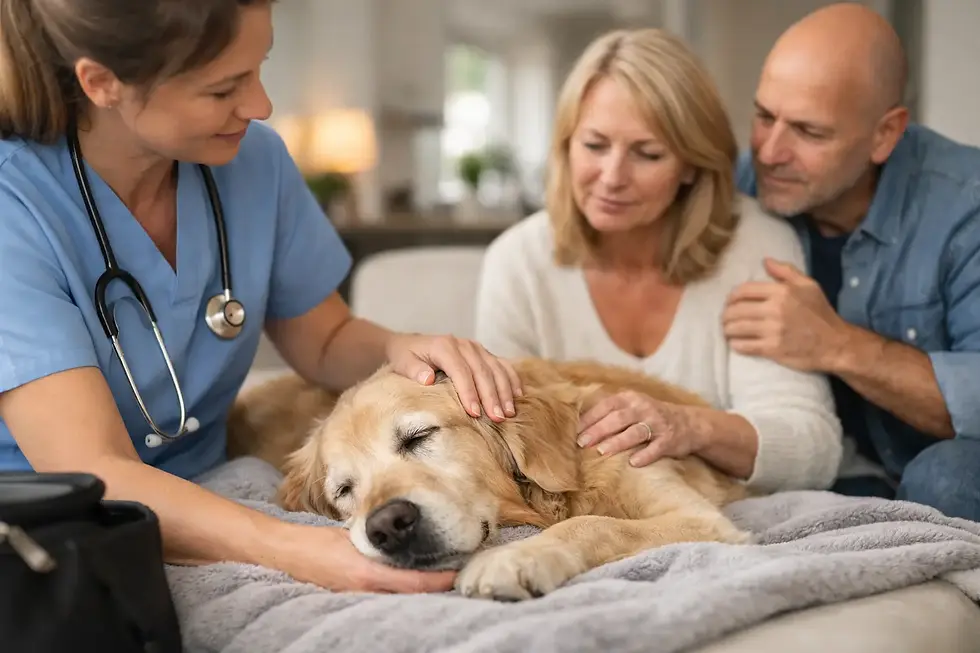
Once you feel ready to explore euthanasia, contact a veterinarian who provides the type of care you want. Some families prefer their regular veterinary clinic. Others choose an in-home euthanasia veterinarian so their pet can remain in a familiar place, surrounded by the people, scents, and comforts they know.
When you call or submit an appointment request, be prepared to share your name, address, phone number, your pet’s name, species, breed, age, and a brief description of their current condition. The veterinary team may ask whether your pet is in distress or whether there are urgent symptoms. This helps them determine whether they can schedule a planned appointment or whether your pet needs immediate emergency care.
For families throughout the greater Phoenix area, an in-home appointment can remove the strain of getting a frail, painful, or anxious pet into the car and through a busy waiting room. It also gives you more freedom to choose the setting and pace of the farewell.
Ask about available appointment times, the expected length of the visit, fees, travel areas, and aftercare options. If you have a time-sensitive concern, say so plainly. A kind veterinary team understands that waiting can be emotionally difficult, especially when your pet’s comfort is changing quickly.
Questions that can bring clarity
You do not need to know the “right” questions. Still, a few practical details can help you make arrangements without adding uncertainty to an already tender day.
Ask whether the veterinarian will provide a quality-of-life consultation before the appointment, what medications are used to help your pet relax, and how the procedure is typically performed. You may also want to ask whether your pet needs to fast, whether children can be present, and how much time the veterinarian allows for private goodbyes.
Aftercare deserves the same thoughtful attention. Ask about private cremation, communal cremation, transportation, and the return of ashes if that is something your family wants. Some people know their preference right away. Others need time to think, and that is okay. A gentle provider will explain the choices clearly and without pressure.
Choose a time that honors your pet’s comfort
Many families worry that scheduling an appointment means they are somehow giving up too soon. Others fear waiting until a crisis will make the goodbye more frightening for their pet. Both feelings are understandable.
When possible, a planned appointment is often calmer than an emergency decision. It allows your pet to spend their final hours at home, perhaps resting in a favorite sunny spot, enjoying a small treat if they are able, or simply being close to you. It gives family members time to come home, say goodbye, or arrange child care and time away from work.
That said, there are situations where waiting is not kind. Severe breathing difficulty, uncontrolled pain, repeated collapse, extreme distress, or an inability to rest can require urgent veterinary guidance. If your pet is suffering or you are afraid they may not make it comfortably through the night, contact an emergency veterinarian right away.
The best timing depends on your pet’s medical needs and your family’s circumstances. The goal is not to predict the future perfectly. The goal is to prevent suffering and offer comfort while you still can.
Prepare the space, not a performance
An in-home euthanasia appointment does not need to look a certain way. You do not need a perfectly clean house, a carefully planned ceremony, or the right words. Your presence is enough.
Choose a quiet place where your pet already feels safe. This may be their bed, the living room floor, a shaded patio, or a favorite blanket near you. If your pet cannot move comfortably, let them stay where they are. The veterinarian can work gently around their needs.
You may want to have a soft blanket nearby, along with water, tissues, and any meaningful items such as a favorite toy, collar, or photograph. Some families play quiet music. Some share stories, offer a favorite food, or sit in silence with a hand resting on their pet. There is no single right way to say goodbye.
If children will be present, give them an honest, age-appropriate explanation ahead of time. They may want to draw a picture, hold their pet’s paw, or step away when they are ready. Let them know that big feelings are welcome and that everyone may experience the moment differently.
What happens during an in-home visit
A peaceful euthanasia appointment is usually unhurried. The veterinarian will introduce themselves, listen to your concerns, and make sure you feel ready before proceeding. You should never feel rushed into the final step.
In many cases, the veterinarian first gives a sedative or calming medication. This allows your pet to relax and drift into a deep, comfortable sleep while you remain close. Once they are fully peaceful and unaware, the veterinarian administers the final medication. It works quickly and gently.
Your pet may take a few reflexive breaths or have small movements afterward. These can be surprising, but they are not signs of awareness or pain. Your veterinarian can explain what to expect and remain with you through these moments.
After your pet has passed, you can take the time you need with them. The veterinarian will then respectfully carry out the aftercare plan you selected. For many families, knowing what will happen next brings a small measure of steadiness to an otherwise heartbreaking day.
Give yourself permission to grieve your way
Grief does not follow a schedule, and relief can exist alongside sadness when a pet has been ill for a long time. You may feel peaceful one hour and devastated the next. You may replay the decision, even when you know it was made from love.
Try to speak to yourself with the same kindness you gave your pet. Save a paw print, write down a favorite memory, or make space to tell someone who understands what your companion meant to you. If the grief feels too heavy to carry alone, support from a counselor or pet-loss group can be deeply meaningful.
At Forever Loved Veterinary Services, the purpose of in-home end-of-life care is not simply to provide a medical service. It is to make room for a dignified farewell, with a veterinarian’s steady guidance and the love your pet has always known. When you are ready to schedule, take one small step: make the call, ask the questions, and let someone compassionate help you care for them through the last act of love.


Comments