

Pet Euthanasia Mesa Families Can Choose at Home
- Christina Barber
- 1 hour ago
- 6 min read

The hardest part is often not loving them enough to let go. It is wondering whether you will know when the time is right, and how to give them a goodbye that feels as gentle as the life you shared. For families considering pet euthanasia Mesa services, an in-home visit can offer a quieter alternative to a final trip to a veterinary clinic: familiar smells, a favorite bed, and the people who have loved them most nearby.
No two pets, and no two families, experience this decision in exactly the same way. A peaceful farewell is not about making grief disappear. It is about creating space for comfort, dignity, and an unhurried goodbye when curative care is no longer serving your pet.
When Is It Time to Consider Pet Euthanasia in Mesa?
Many families hope their pet will clearly tell them when it is time. Sometimes there is a clear medical crisis, but more often, the change is gradual. A dog may no longer be able to rise without help. A cat who once sought sunny windowsills may withdraw, stop eating, or struggle to reach the litter box. Chronic pain, labored breathing, confusion, repeated falls, and more difficult days than peaceful ones can all be signs that quality of life is slipping away.
The question is rarely, “Do I want more time?” Of course you do. A more helpful question may be, “What does my pet need from me now?” If their world has become dominated by discomfort, anxiety, or exhaustion, choosing euthanasia can be a final act of protection and love.
It can help to look at the ordinary moments that once made your pet happy. Are they still interested in food, affection, gentle walks, toys, or resting comfortably? Can they manage their daily needs without distress? Are good days still outnumbering bad ones? These observations do not replace veterinary guidance, but they can help you see patterns that are difficult to recognize when you are living day to day with a beloved companion.
There is also room for uncertainty. Some pets have a manageable condition and can still enjoy meaningful time with palliative support. Others decline rapidly. A compassionate veterinarian can talk through your pet’s individual condition, answer difficult questions honestly, and help you make a decision based on comfort rather than fear or guilt.
Why Families Choose an In-Home Goodbye
For a frail or anxious pet, travel can be physically hard and emotionally unsettling. The car ride, waiting room, unfamiliar sounds, and clinical environment may add stress to a day that is already painful for everyone. At home, your dog or cat can remain in the place they know best.
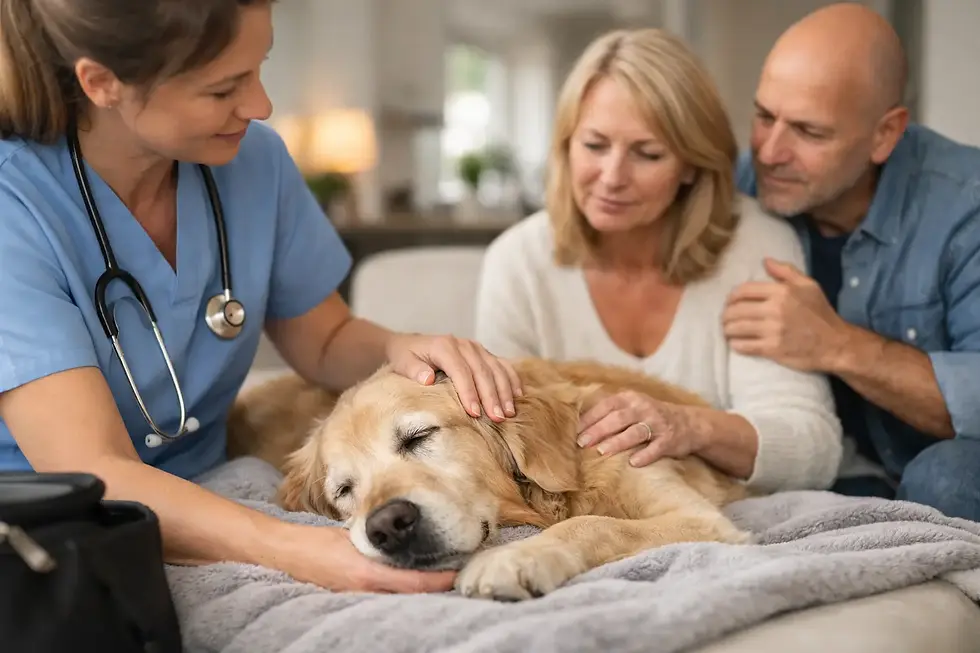
Your pet might rest on their favorite blanket, lie beside you on the couch, or settle in a quiet spot in the yard if that is where they are most comfortable. Children can be included in a way that feels right for the family. Other pets may have an opportunity to be nearby or to see their companion afterward, which can sometimes help them adjust to the loss.
In-home care also gives families privacy. There is no need to rush through tears because another appointment is waiting. You can take time before, during, and after the visit to speak to your pet, hold them, play meaningful music, share favorite treats if medically appropriate, or simply sit in silence together.
For many Mesa families, that sense of control matters. You may choose who is present, where the appointment takes place, and what feels most comforting. There is no single correct way to say goodbye. Some families want a calm, intimate gathering. Others prefer only one person to be there. Both are expressions of love.
What a Gentle In-Home Appointment Usually Looks Like
A veterinarian should explain every step in clear, compassionate language and move at a pace that respects your pet and your family. Knowing what to expect can ease some of the fear around the appointment.
The visit typically begins with time to talk. The veterinarian will listen to your concerns, assess your pet as needed, and confirm that euthanasia is the kindest option. You will have an opportunity to ask questions and share anything that is on your heart. This is not a moment that should feel hurried or transactional.
When you are ready, your pet is given a sedative medication first. This allows them to become deeply relaxed and sleepy in the comfort of your presence. Many pets simply drift into a peaceful rest as their family strokes their fur and speaks softly to them.
After your pet is fully sedated and you have had time with them, the veterinarian administers the final medication. It works quickly and gently, stopping the heart without pain or awareness. The veterinarian will carefully confirm that your pet has passed and give you private time afterward.
Occasionally, families notice natural physical changes after death, such as a final breath, small muscle movements, or the release of the bladder or bowels. These are normal reflexes and do not mean a pet is suffering. A calm, experienced veterinarian will prepare you for what may happen so that nothing feels alarming or unexpected.
At Forever Loved Veterinary Services, the goal is not simply to provide a medical procedure. It is to offer steady, one-on-one support through a deeply personal moment, with the patience and clinical care your family deserves.
Preparing Your Home and Your Heart
You do not need to create a perfect setting. Your presence is what matters most. Still, a few simple preparations can help the day feel more peaceful.
Choose a comfortable location where your pet naturally likes to rest. Have a favorite blanket, bed, or towel nearby. If your pet enjoys a small treat and can safely have one, you may want to offer it. Keep the room quiet if that feels calming, or play music that has meaning for your family.
It can also be helpful to decide in advance who you would like present. Children may benefit from being given an honest, age-appropriate explanation of what will happen. They should never be pressured to stay in the room, but they can be invited to say goodbye in their own way. A drawing, a letter, a favorite toy, or a quiet moment of petting can be meaningful.
If you have other pets, consider their personalities. Some may be calmer in another part of the home, while others may benefit from being allowed to approach afterward. There is no universal rule. Follow what you know about your animals and ask the veterinarian for guidance.
Understanding Aftercare Before the Appointment
Thinking about aftercare can feel impossible when you are focused on your pet’s final moments. Making a plan beforehand, however, can spare you from having to make decisions while overwhelmed by grief.
Some families choose private cremation and the return of their pet’s ashes. Others choose communal cremation or make arrangements for home burial where permitted. You may also wish to keep a paw print, a small clipping of fur, or your pet’s collar. These choices are personal, and none of them measure the depth of your love.
Ask about aftercare options when scheduling so you understand what is available, how your pet will be transported if needed, and whether keepsakes can be arranged. Clear information is a kindness during a time when even small decisions can feel heavy.
Grief Does Not Follow a Schedule
After a pet dies, many people are surprised by the intensity of their grief. You may feel relief that your pet is no longer suffering, followed immediately by sadness, doubt, numbness, or guilt. These feelings can exist together. Relief does not mean you loved them less. Questioning the timing does not mean you made the wrong choice.
Your pet was part of the rhythm of your home: the morning routine, the quiet evenings, the familiar sound of paws on the floor. Their absence can be felt everywhere. Give yourself permission to mourn without minimizing the loss.
In the days ahead, you may want to make a small ritual of remembrance. Frame a favorite photo, light a candle, write down the stories you do not want to forget, or donate supplies in your pet’s honor when you are ready. Just as each relationship is unique, each grief journey is unique.
When you are facing this decision, you do not have to find the perfect words or feel completely ready. You only need to keep returning to the love that has guided your care all along. A peaceful goodbye at home can be one final way to tell your pet: you are safe, you are cherished, and you can rest now.


Comments