

Is Pet Euthanasia Painful? What to Expect
- Christina Barber
- Aug 5
- 6 min read

The question, “is pet euthanasia painful,” is often one families ask quietly, with fear in their hearts. You may be trying to protect your dog or cat from one more difficult experience. You may worry that choosing euthanasia will cause suffering rather than relieve it. Those fears are deeply understandable.
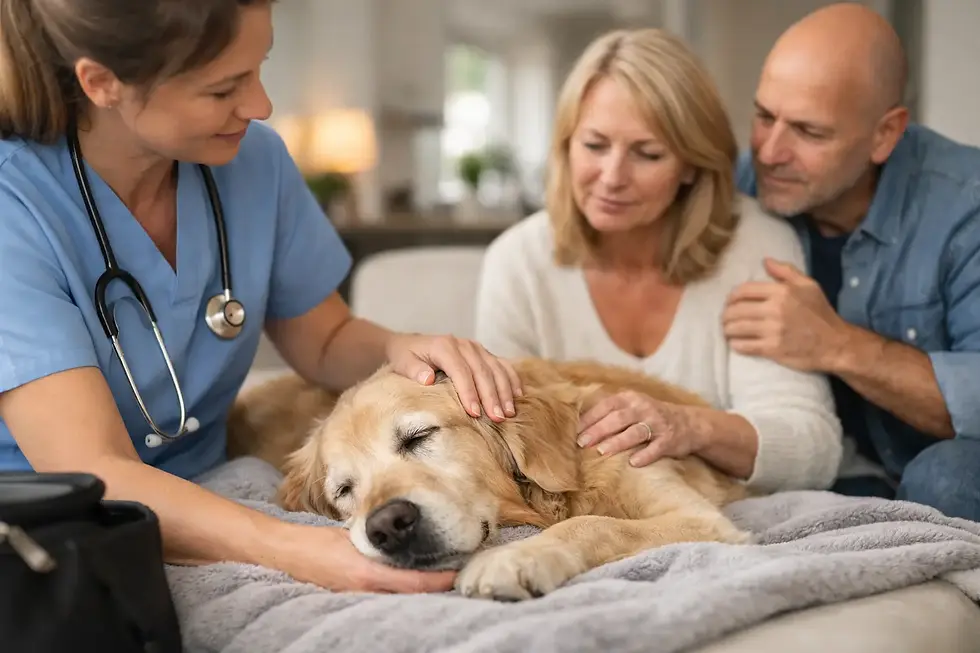
When euthanasia is performed thoughtfully by an experienced veterinarian, the goal is a peaceful and painless passing. Your pet is first made comfortable and deeply relaxed, then allowed to pass gently while surrounded by familiar voices, loving hands, and the safety of home.
Is pet euthanasia painful for dogs and cats?
Pet euthanasia itself is not intended to be painful. The medications veterinarians use are chosen specifically to prevent awareness, anxiety, and discomfort at the end of life.
Most peaceful euthanasia appointments begin with a sedative injection. This medication helps your pet become very sleepy and relaxed, much like drifting into a deep, restful sleep. Depending on your pet’s condition, temperament, and medications, the veterinarian will choose the gentlest option for them. Some pets settle beside their favorite person; others rest in a favorite bed, in a sunny spot, or on a familiar blanket.
There can be a brief pinch from the initial injection, similar to a routine vaccine or blood draw. For many pets, it is the only moment that may feel mildly uncomfortable. A calm veterinarian, a quiet environment, and the presence of family can make a meaningful difference during this step.
Once your pet is fully sedated and no longer aware, the veterinarian administers the final medication. This medication works quickly to stop brain activity and then the heart. At that point, your pet is unconscious and does not feel pain, fear, or the sensation of their body changing.
Why sedation comes first
Families sometimes imagine euthanasia as a single injection given while a pet is fully awake. While every medical situation is different, a compassionate veterinarian will commonly use sedation first because it creates a softer experience for the pet and the people who love them.
Sedation gives everyone time. Your pet can relax before the final medication is given, rather than feeling restrained or rushed. It also allows the veterinarian to place an IV catheter, if needed, after your pet is sleeping soundly. This can be especially helpful for elderly, frail, fearful, or painful pets whose veins may be more difficult to access.
The amount of time sedation takes varies. Some pets become sleepy within a few minutes, while others take a little longer, particularly if they are very anxious, dehydrated, or have serious illness affecting circulation. This does not mean the process is going wrong. It simply means the veterinarian is allowing the medication to work gently and safely.
In-home euthanasia can be especially comforting for pets who become distressed in a veterinary clinic or find car rides difficult. At home, they do not have to walk through an unfamiliar lobby, hear other animals, or be separated from the people they trust. They can remain in the place where they have spent their life being loved.
What your pet may experience during the appointment
Every pet is an individual, but most dogs and cats experience the appointment as a gradual move from wakefulness to deep sleep. Before sedation, they may notice the veterinarian and the activity around them. Some pets are curious, some are tired, and some are simply focused on their family.
After the sedative, your pet may become drowsy, lower their head, stretch out, or appear to be sleeping. You may be able to continue petting them, speaking to them, or resting your hand on their chest. Hearing is often believed to be one of the last senses to fade, so many families choose to keep talking in a soft, familiar voice.
After the final medication is given, your veterinarian will listen carefully to confirm that your pet’s heart has stopped. You will not be expected to recognize a medical moment on your own. You will be guided with gentleness and clarity.
Physical changes that can look unsettling but are not pain
Even when a passing is peaceful, the body may show reflexes after death. Knowing this beforehand can spare you from interpreting a normal physical response as suffering.
Your pet may take one or more deeper breaths or release a soft sigh after the heart has stopped. Their eyes may remain open. There may be small muscle twitches, and they may release urine or stool as their muscles relax. These are involuntary bodily reflexes, not signs that your pet is awake or in pain.
A veterinarian should explain these possibilities before the final medication is given, then remain present to answer questions and give you time with your pet afterward. Nothing about this moment needs to be hurried.
When pain or anxiety needs extra attention
If your pet is already in significant pain, struggling to breathe, frightened, or unable to move comfortably, tell the veterinarian before the appointment begins. A personalized plan matters. The veterinarian may adjust the sedation protocol, take extra time to help your pet settle, or recommend a position that makes breathing and handling easier.
Pets with certain medical conditions can require special consideration. Severe heart disease, organ failure, advanced cancer, dehydration, or neurological illness may affect how quickly medications take effect. An experienced veterinarian anticipates these possibilities and works carefully to maintain comfort throughout the process.
There is also an emotional kind of distress that deserves attention. Some pets are afraid of unfamiliar people or dislike being touched when they do not feel well. In those cases, families can help by choosing a quiet room, limiting visitors, having a favorite treat available if appropriate, and allowing the pet to stay close to their person. The appointment should be shaped around your pet, not the other way around.
How to prepare for a peaceful goodbye at home
You do not need to create a perfect final day. Your love for your pet has already been present in thousands of ordinary moments. Still, a little preparation can help you feel more grounded when the veterinarian arrives.
Choose a place where your pet is comfortable and where you can sit or lie beside them. It may be their bed, the living room rug, a shaded patio, or your own bed. Consider whether your pet is more comfortable in a quiet space or whether they would want familiar family members nearby.
You may want to keep tissues, a blanket, and water close by. Some families light a candle, play gentle music, offer a favorite snack, or share stories while they wait. Others prefer stillness. There is no right way to say goodbye.
If children will be present, simple and honest language is often best. Explain that the veterinarian is coming to help their pet die peacefully because their body is no longer able to get better. Give children a choice about whether they would like to be in the room, say goodbye beforehand, or draw a picture or write a note for their pet.
It can also help to think about aftercare before the appointment, when decisions may feel less overwhelming. Your veterinarian can explain options such as private cremation, communal cremation, or taking your pet home for burial where permitted. Asking these questions is not cold or disloyal. It is one more way of caring for your companion.
A gentle truth for families carrying guilt
Many people worry that they have chosen too soon, while others fear they have waited too long. This uncertainty is one of the hardest parts of loving an aging or ill pet. Euthanasia is not about giving up on them. When suffering has begun to outweigh the moments of comfort and joy, it can be a final act of protection.
A peaceful goodbye cannot erase grief, because grief reflects a relationship that mattered. But it can spare your pet a frightening crisis, an exhausting trip to the emergency hospital, or a final day filled with unmanaged discomfort.
At Forever Loved Veterinary Services, families are given time, privacy, and steady guidance during this deeply personal decision. Whether you are still assessing your pet’s quality of life or feel that the time is near, you do not have to carry every question alone. The kindest next step may simply be to sit with your pet, notice what they need today, and let love guide the conversation.


Comments